The municipality has an old wastewater lift station. The pumps are nearing the limit of their lifespan and the controls are inefficient, and the access hatch has deteriorated. Although the concrete wetwell is solid in its structure, it is in need of to be upgraded.
Should the entire station be demolished and rebuilt? Not necessarily. It is more important to determine if the infrastructure that is in place will be able to support modern pumps without compromising capacity in the future as well as reliability or accessibility.
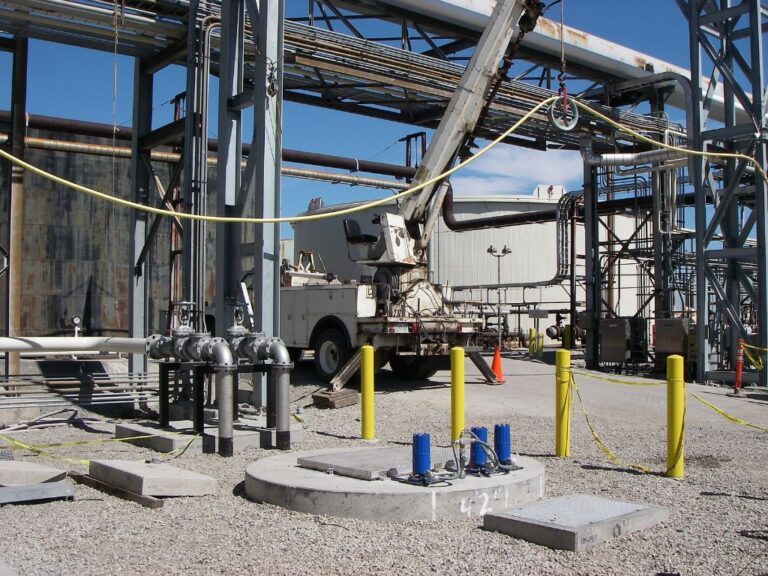
Image credit: romtecutilities.com
A carefully engineered pump station retrofit can preserve valuable infrastructure while replacing components that no longer meet operational requirements.
Start with the structure nobody would like to replace.
It’s costly and inconvenient to replace the wet well because it is buried in the ground, connected to pipes and is vital to collect wastewater.
The concrete structure can be retained to make it easier to dig and build.
However, the deterioration around the access hatch could affect your choice. Romtec Utilities has identified wet-well hatch replacement as an important retrofit. Instead of gluing a hatch to cement that has deteriorated, replacing the whole top layer might be a more reliable option. This could improve access to the structure and extend its use, without the need to replace the entire structure as well.
The development of a more powerful pump is distinct
Consider a neighborhood that has seen significant expansion since the establishment of its lift station. The current pumps might not be sufficient for increased wastewater flows.
The improvement of a pumping system could include higher-horsepower equipment, but this can’t be accomplished without considering the entire system. Pumps with greater power may require changes to discharge elbows, piping valves, electrical controllers and other parts.
Engineers should also consider the hydraulic needs of the system. This includes flow and the total dynamic pressure. In the event of installing a larger pump, not reviewing these conditions can create problems with operation rather than addressing the issues. Making plans for future expansions during initial design will help you to expand later on.
Make sure the wastewater is moving during Construction
Retrofitting a wastewater pump station poses a challenge which normal replacement of equipment projects do not have to face: the pump station may need to remain operational through the entire construction.
The water continues to flow even when contractors are at work. According to the report it is possible that a temporary bypass pumping system might be necessary to maintain service as existing equipment is removed or new components are added.
Romtec Utilities was able to address this kind of challenge in the Federal Law Enforcement Training Center in Brunswick, Georgia.
The project required replacing two aging wastewater lift stations, while keeping the operation of the facility. The site-specific engineering as well as packaged systems and bypass pumping techniques helped accommodate existing station footprints as well as operational needs. The case study illustrates the need to be aware of construction sequencing before installation begins.
When replacement becomes the better Choice
It is not possible for every station to be restored. If the sewer lift station is in need of replacement due to a seriously degraded well, structural limitations or significant changes to the hydraulic requirements, it could be more beneficial to replace rather than alter.
The selection should consider structural condition, equipment compatibility access to construction as well as service continuity as well as long-term requirements for operation. Romtec Utilities starts retrofitting and replacing projects by identifying components that are to be kept and those that need to be replaced.
From there, the business designs site-specific engineering solutions, preliminary designs, and budgetary estimates. Prefabricated components also aid in organize installation and reduce some needs for construction on site.
The Project is Not Fully Complete Until the Pumps are Started
The modernized lift station should be able to function as a system. Prior to returning a lift station to normal operation, initial testing, commissioning, and verification of equipment are required to make sure that all pumps, controls and the related equipment function according to design.
Maintenance and operation manuals, as well as instruction for operators are vital. Before taking on the responsibility of a station, maintenance personnel must understand new equipment, procedures and documents.
A successful retrofit helps preserve the infrastructure that is still valuable and addresses the shortcomings that forced modernization.
For facilities owners and municipal authorities it is important to look beyond the immediate repair. The most successful projects incorporate new equipment into existing structures. They ensure vital services throughout construction and then prepare the pumping systems to last for a long time.